
When to Replace Your Outside Faucet
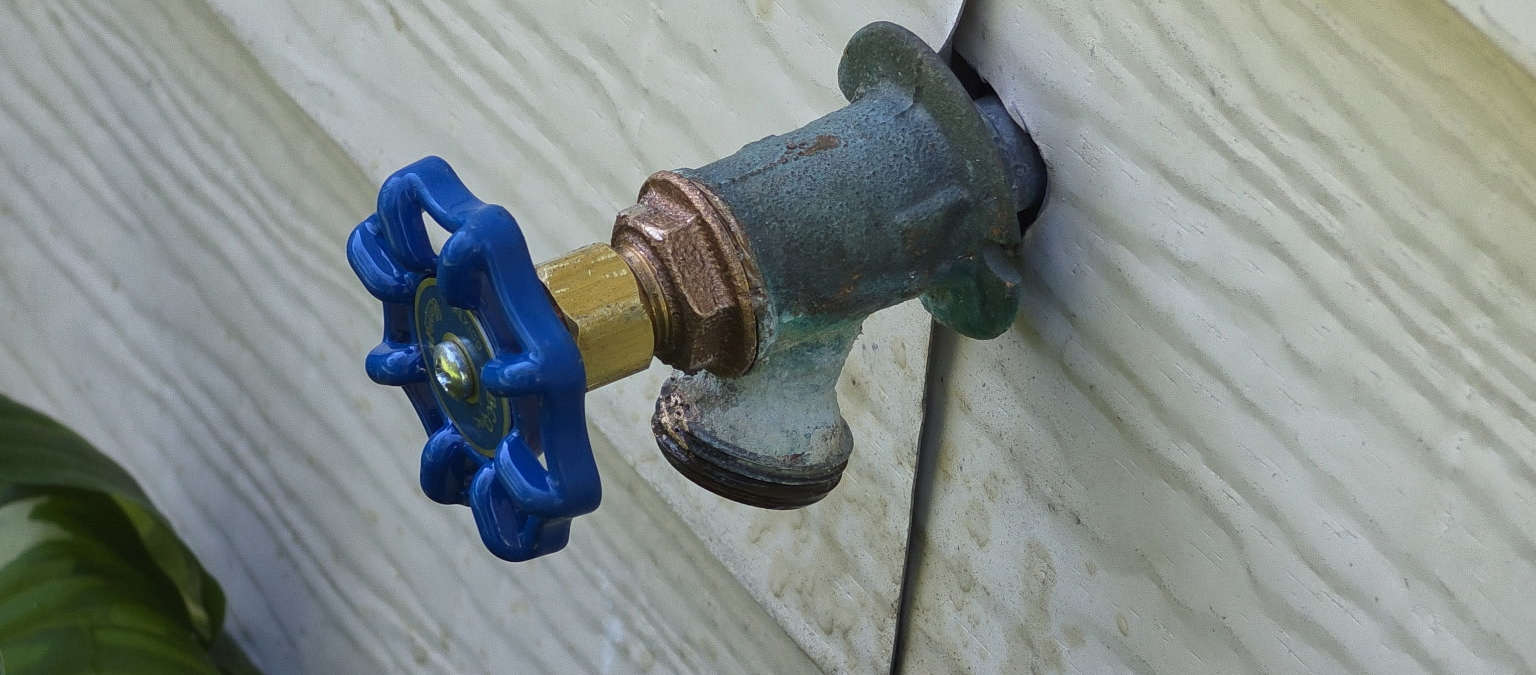
As a homeowner, your outdoor faucet (also known as a hose bib, spigot, or silcock) is a lifesaver for providing a reliable water source for your outdoor activities like gardening and washing the car. Unfortunately, due to its proximity to the elements, this small plumbing fixture can cause big problems if it's not replaced in a timely manner.
4 Signs You Need a New Outdoor Faucet
1. There's a slow, continuous drip.
A leak is problematic for many reasons. First, a small drip can lead to pooling water near the home's foundation. This will cause soil erosion, rotting deck boards, and mold growth.
A water hole beside your house is also a guaranteed invitation to pests. As long as there is easy accessible water, expect insects, mice, and other critters to attempt to gain access to your home.
The most upsetting part of any leak is how it can waste thousands of gallons of water each year. Replacing a worn out spigot will help to make your home more efficient and cut down on monthly water bills.
2. There's noticeable wear and tear.
Regular moisture, sunlight, and wind can eat away at the metal. If you can visibly see rust or flaky corrosion, the faucet likely has a leak or is difficult to turn on and off. You might have also noticed the threading has deteriorated to the point that hooking up a hose is practically impossible.
Also, if the hose bib is clearly cracked, don't hesitate to replace it. Even a small fracture is a weak point for letting water escape or seep into the connecting pipes.
3. The water flow is weak.
Low water pressure is not always the result of a failing outdoor faucet. However, if you can see signs of damage and the flow suddenly falls off, there could be damaged internal parts, like a broken valve, or debris buildup inside the faucet.
4. It's not frost proof.
If your home's outdoor faucet is 10- to 15-years-old, it probably doesn't have a frost-proof design. After several cycles of freezing and thawing, this has most likely resulted in cracks and splitting on the fixture.
These cracks allow moisture to seep inside and make their way to the indoor plumbing. Then the next time it freezes, the indoor plumbing freezes and a pipe bursts inside the walls.
A frost-free faucet's valve mechanism is located several inches behind the exterior wall inside the interior home's heated space. This means the sealing valve is far away from the opening of the exterior pipe, and any remaining water in this area can run out so nothing can freeze inside the pipe.